Step back in time to the vibrant, often misunderstood world of 14th century fashion, where clothing was far more than mere covering – it was a bold statement of status, identity, and evolving societal norms. At the heart of this sartorial revolution stood the cotehardie, a garment so pivotal it reshaped the silhouette for both men and women. Yet, for all its historical significance, the true nature of the cotehardie, particularly for women, remains shrouded in modern misconceptions and romanticized interpretations.
This article aims to be the definitive guide, delving deep into the authentic story of the cotehardie, stripping away the myths to reveal its true form, its intricate construction, and its profound social role. Prepare to discover the untold secrets of this iconic piece of medieval clothing and its indelible mark on the broader history of fashion.
The emergence of the cotehardie highlights a significant shift in tailoring techniques, contributing to what we understand today as the history of dressmaking and the evolution of fitted clothing.
Decoding the Cotehardie: A Glimpse into 14th Century Style
The term “cotehardie” itself whispers tales of its origins, believed to stem from the Old French words cote (coat/tunic) and hardie (bold/hardy). Pronounced generally as “kot-ar-dee,” this garment was anything but subtle, marking a significant departure from the looser styles of earlier medieval fashion. It represented a new era of fitted garments, emphasizing the human form rather than concealing it.
The Male Cotehardie: A Snug Revolution
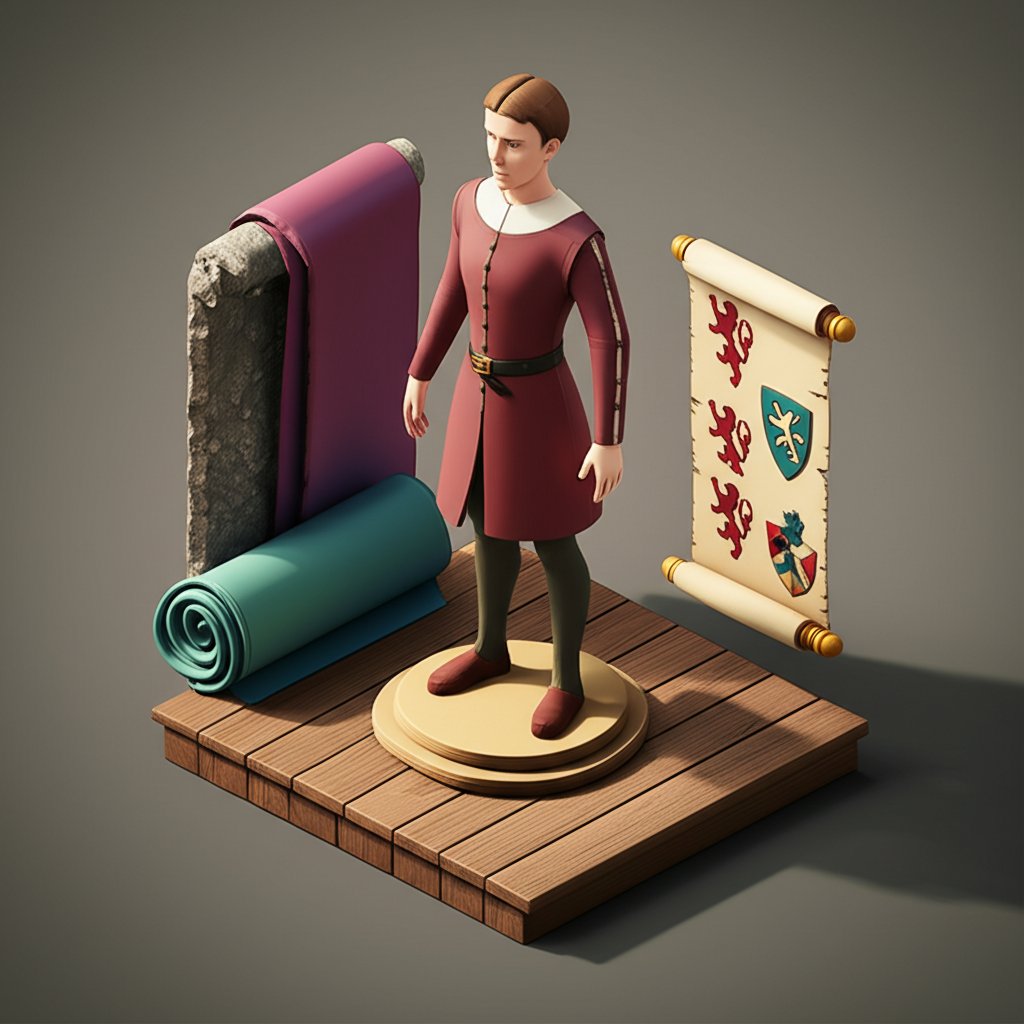
For men, the cotehardie was a revolutionary garment. Emerging at the beginning of the 14th century fashion cycle, it quickly became a staple. Typically a snug, hip-length (or sometimes knee-length) jacket, it was cut close to the body, often featuring a fitted torso and sleeves. This tailored fit was achieved through innovative techniques like extensive buttoning down the front or lacing, which allowed the garment to hug the wearer’s physique.
Unlike its looser predecessors, the male cotehardie celebrated a more athletic and defined silhouette. It was frequently worn over a simple tunic (or shirt) and paired with hose (tights) that covered the legs, sometimes extending to join with a skirt-like garment or breeches. The look was sharp, practical, and undeniably fashionable, reflecting a growing appreciation for individual style among men of various social strata.
The Female Cotehardie: A Historical Debate
While the male cotehardie’s form is relatively well-documented in period art and texts, the female version remains a subject of considerable scholarly debate and popular misconception. Modern interpretations often depict a long, fitted, buttoned gown—a majestic and form-fitting dress that seems to personify medieval elegance.
However, a closer examination of authentic 14th century fashion sources, including illuminated manuscripts, effigies, and archaeological finds, presents a more nuanced picture. Many historians argue that the “cotehardie” for women, as a distinct outer garment, might have been less common than widely believed, or perhaps differed significantly from the romanticized image. Some theories suggest that what is often labeled a “cotehardie” in modern contexts was, in period, more likely an elaborately tailored kirtle (a closely fitted underdress or foundational gown) worn as an outer layer. This historical ambiguity highlights the importance of critical analysis when exploring medieval clothing.
The Evolution of a Medieval Icon: Cotehardie’s Journey Through the 14th Century
The history of fashion is one of constant flux, and the cotehardie, though emblematic of the 14th century fashion, was far from static. Its design adapted and evolved, mirroring broader changes in aesthetics, societal structure, and material availability across Europe.
Early 14th Century: Form and Function
In the earlier decades of the 14th century (c. 1300-1340), the cotehardie, for both sexes, began to solidify its tailored identity. Men’s versions remained moderately short, often featuring the distinctive row of buttons. Women’s garments, whether termed cotehardie or an elaborately fitted kirtle, started to emphasize a more shaped bodice, often achieved through lacing at the sides or front, leading to a gracefully flowing skirt. The emphasis was on a neat, practical, yet stylish appearance.
Mid-to-Late 14th Century: Adapting to Trends
As the century progressed (c. 1340-1400), 14th century fashion saw the cotehardie grow more extravagant. Men’s cotehardies often became shorter, sometimes barely reaching the hip, displaying the elaborate hose beneath. Sleeves became a canvas for expression, with long, trailing “tippets” or “streamers” (long strips of fabric hanging from the elbow) becoming a highly fashionable, if impractical, feature.
For women, the fitted silhouette deepened. The kirtle-as-outerwear theory gains strength here, as period sources show women wearing closely fitted gowns that were often buttoned or laced from neck to hip, flaring into a full skirt. These garments, regardless of their specific nomenclature, embodied the fitted aesthetic of the cotehardie. Necklines could be round or boat-shaped, often allowing the glimpse of an under-kirtle or chemise. The waistline increasingly moved towards the natural position or slightly higher, accentuated by belts.
Regional Variations: Differences Across Europe
While basic principles of the cotehardie spread across Europe, its appearance was never entirely uniform. Italian depictions sometimes show slightly less severe tailoring than their English or French counterparts, with a softer drape. Northern European styles, particularly in colder climates, often featured heavier wools and more practical cuts. The Spanish interpretation might include more intricate patterns or Moorish influences. These regional nuances underscore the rich tapestry of medieval fashion and how local cultures adapted global trends.
Crafting Elegance: Construction, Materials, and the Art of Medieval Tailoring
The distinctive snugness of the cotehardie was a testament to the burgeoning skill of 14th century fashion tailors. This was an era when the art of cutting and fitting truly began to distinguish itself, laying foundations for future tailoring practices in the history of fashion.
Fabrics of the Age: From Wool to Silk
The choice of material for a cotehardie was a potent indicator of the wearer’s social status.
Tailoring Techniques: The Secret to the Fit
Achieving the close fit of the cotehardie was a significant technical challenge for medieval clothing makers.
Embellishments and Accessorizing
A cotehardie was rarely worn unadorned. Belts, often jeweled or intricately patterned, cinched the waist, emphasizing the tailored silhouette. Decorative edgings, embroidery, and applied trim could elevate a simple garment to a showpiece. Men often paired their cotehardie with dagged (scalloped or cut-out) hoods, while women adorned their hair with elaborate coifs and veils, sometimes supported by gold wire or silk fillets. These details were crucial for conveying personal style and rank within the strict social hierarchy.
Fashion as a Statement: The Social & Economic Significance of the Cotehardie

More than just a piece of medieval clothing, the cotehardie was a powerful social marker, deeply intertwined with the economic and political realities of the 14th century fashion.
Sumptuary Laws: Controlling Dress and Society
Across Europe, sumptuary laws were enacted precisely because clothing, and the cotehardie was no exception, had become such a potent visual indicator of status. These laws dictated who could wear what, regulating everything from the quality of fabric and the richness of fur trim to the number of buttons or the length of a shoe’s point.
Status and Identity: What Your Cotehardie Said About You
Beyond legal restrictions, the cotehardie inherently communicated volumes:
The Economics of Dress: Production and Consumption
The popularity of the cotehardie fueled a robust medieval clothing industry. From sheep farmers and wool merchants to weavers, dyers, tailors, and embroiderers, countless individuals were involved in producing these garments. Towns specializing in textile production, like Florence or Ghent, thrived. The economic impact was significant, creating wealth and specialized labor, making fashion a driving force in the medieval economy.
Unraveling the Mysteries: Modern Misconceptions and the Kirtle Connection
The cotehardie’s enduring appeal in the history of fashion is often filtered through a lens of modern interpretation, leading to persistent myths, particularly concerning the women’s version.
The Modern Cotehardie Myth: Separating Fact from Fiction
The most pervasive anachronism is the idea of a single, universally recognized “women’s cotehardie” as a long, buttoned, and tightly form-fitting outer gown, universally depicted in modern costume dramas and reenactments. While beautiful, this specific silhouette is often debated among historical costume scholars.
Cotehardie vs. Kirtle: A Crucial Distinction
To truly understand 14th century fashion, it’s essential to differentiate between the cotehardie and the kirtle.
Why the Misconception Persists
The challenge lies in the nature of historical evidence. Written records can be sparse or use terms inconsistently. Visual records, like paintings, can be idealized or represent only specific social classes. Without surviving examples specifically labeled “cotehardie” for women, scholars rely on interpretation, leading to ongoing, healthy debate. This scholarly quest to understand precise medieval clothing terminology and appearance demonstrates the dynamic nature of historical research.
Beyond the Garment: The Cotehardie’s Enduring Legacy in the History of Fashion
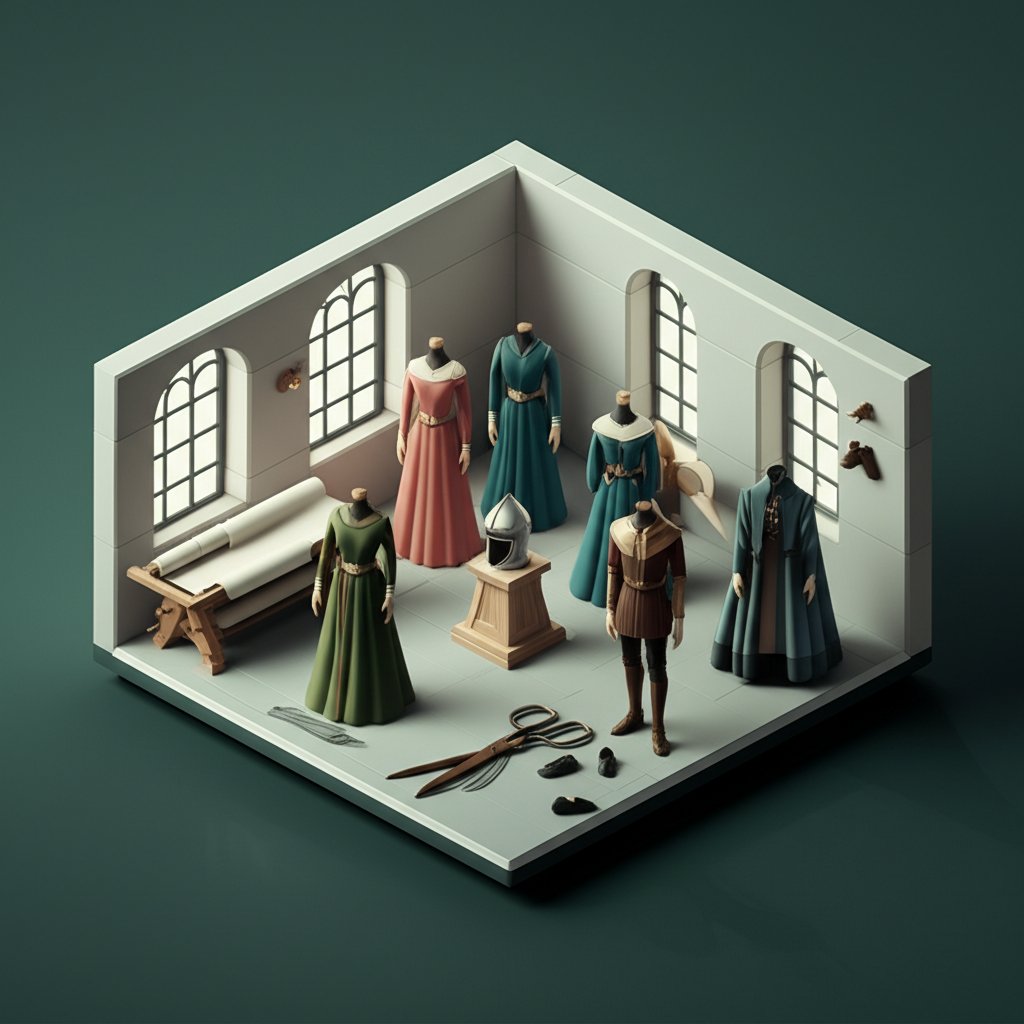
The cotehardie was undoubtedly a cornerstone of 14th century fashion, but its influence extended far beyond its immediate era, leaving an indelible mark on the broader history of fashion.
A Legacy of Tailoring Innovation
The cotehardie represented a pivotal moment in tailoring. It was one of the first widespread garments to truly emphasize fitting the body, rather than simply draping it. The extensive use of buttons, lacing, and sophisticated cutting techniques like gussets and gores laid the groundwork for the more complex and tailored garments that would define the Renaissance and subsequent periods. Without the tailoring advancements spurred by the cotehardie, the fitted jackets, bodices, and structured forms of the 15th and 16th centuries might have taken a very different path.
The Cotehardie in Historical Reenactment and Scholarship
Today, the cotehardie remains a fascinating subject for historical reenactors, costume designers, and academics. Its ambiguities encourage deeper research into primary sources, prompting a constant re-evaluation of our understanding of medieval clothing. Whether through meticulous reconstruction based on extant fragments or the careful analysis of period artwork, the efforts to accurately portray the cotehardie continue to enrich our appreciation for the sophistication and artistry of medieval fashion. It serves as a powerful reminder that history is not static, and our understanding of it is always evolving.
Conclusion: The Unmasked Cotehardie
The cotehardie stands as a magnificent emblem of 14th century fashion, a garment that redefined silhouettes and spoke volumes about its wearers. From its clear role as a fitted outer garment for men to its more debated and nuanced identity for women, it encapsulates the dynamism and complexity of medieval clothing. By “unmasking” the cotehardie, we move beyond romanticized notions to appreciate the innovative tailoring, the rich materials, and the profound social significance that made it a true cornerstone in the enduring history of fashion. Its mystery, far from diminishing its importance, only adds to its allure, inviting us to look closer and continually question what we think we know.
FAQ: Your Medieval Cotehardie Questions Answered
What is a cotehardie?
A cotehardie was a fitted outer garment popular in 14th century fashion, worn by both men and women. For men, it was typically a snug, hip-length, buttoned jacket. For women, its exact form is debated, but it refers to a closely fitted gown or kirtle, often laced or buttoned, that emphasized the body’s shape.
Who wore the cotehardie?
The cotehardie was worn across various social classes, though the quality of the materials and the intricacy of its construction varied greatly. Nobility and wealthy merchants wore cotehardies made of fine wools, silks, and velvets, often trimmed with fur, while common folk wore simpler versions made of coarser wool or linen.
What materials were used for cotehardies?
Common materials included wool and linen. For the wealthy, luxurious silks, velvets, and brocades were used, often trimmed or lined with expensive furs like squirrel or sable. The choice of material was a direct indicator of social status and wealth.
How is the cotehardie different from a kirtle?
For men, the cotehardie was clearly an outer garment, distinct from an under-tunic or shirt. For women, the distinction is less clear. Many historians believe that what is called a “cotehardie” in modern terms was often an elaborately tailored kirtle (a fitted underdress or foundational gown) worn as an outer layer in the 14th century fashion. The kirtle was a basic garment, while the cotehardie (or outer kirtle) represented a more fashionable, tailored version.
Why are there misconceptions about the women’s cotehardie?
Modern misconceptions, such as the idea of a universally recognized long, tightly buttoned outer gown, largely stem from romanticized interpretations in modern media and a lack of explicit historical labeling in period artwork. Scholars debate the precise terminology and visual evidence, suggesting that women’s “cotehardies” were often highly tailored kirtles or other fitted gowns that were simply known by different names in the 14th century fashion.











1 thought on “Cotehardie Unmasked: 14th Century Medieval Fashion Secrets”
Comments are closed.